How a shift in responsibility changes the weight you carry every day
You’re Not the Owner. You’re the Steward.
Over the years, I have met many capable, generous, well-intentioned people who are exhausted.
They are doing their best and care deeply. They want their lives to matter. Yet something feels heavy, even when things look “successful” on the outside.
Often, the weight comes from one quiet assumption that rarely gets questioned.
We live as if everything we have belongs to us.
When you believe you own it all, you carry pressure you were never designed to carry. When you understand stewardship, that pressure begins to lift.
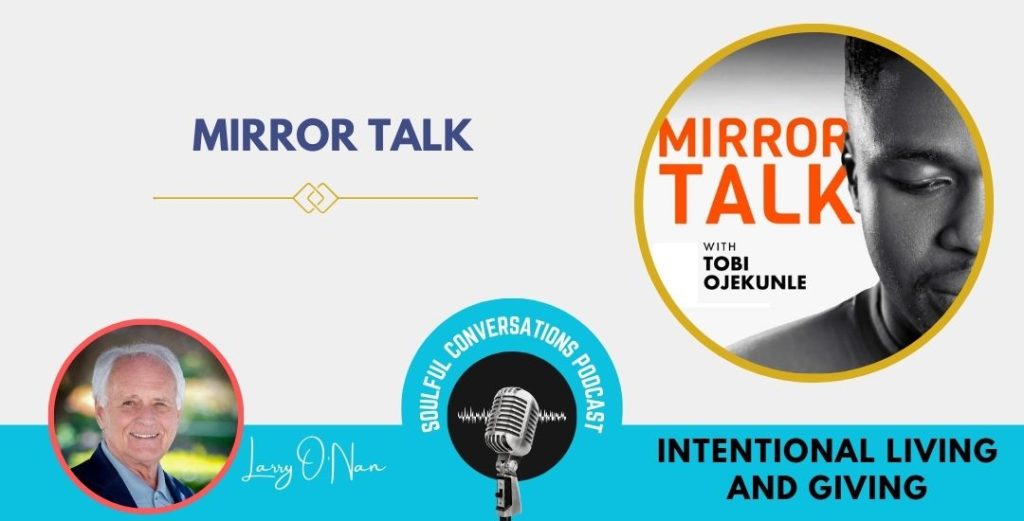
These reflections come from a longer conversation with Tobi Ojekunle from the podcast Mirror Talk where I share the experiences and stories behind these ideas.
If you want to hear the full discussion, you can listen to the podcast or watch the episode on YouTube.
The Freedom That Lets You Move Forward
Many years ago, I was given an assignment I did not feel prepared for. There was no guidebook. No clear outcome. Just responsibility.
I remember writing two things on a yellow pad that day. The task in front of me, and a reminder at the bottom of the page.
“You have the freedom to fail.”
That sentence changed how I approached the work. It did not remove responsibility, it removed fear. The thing is, most of us do not fail because we lack ability. We fail to begin because we believe we must get everything right the first time.
Stewardship allows learning. Ownership demands perfection. One leads to growth, and the other leads to paralysis.

What Stewardship Actually Means
Stewardship is not about money. It never has been.
A steward manages the affairs of another. That is the definition. Whether you are talking about property, time, influence, or resources, a steward is entrusted with care, not possession.
You may live in a house that is legally in your name. You may drive a car registered to you. You may manage a business, a career, or a ministry. But stewardship asks a deeper question.
How well are you managing what has been entrusted to you, and for what purpose?
When people live as owners, fear follows close behind. Fear of loss. Fear of mistakes. Fear of not having enough. When people live as stewards, clarity replaces fear.
You still carry responsibility, but no longer carry it alone.
Why Transactions Fall Short
Early in my work, I learned the difference between fundraising and true partnership.
Transactions focus on exchange. I give, you give. Everyone walks away satisfied, at least temporarily. Partnerships on the other hand, focus on shared purpose.
When people are invited into purpose, generosity grows naturally. When people are managed through pressure or emotion, generosity becomes shallow and short-lived.
This applies far beyond nonprofit work. It applies to families, leadership, and community. Transactional living keeps things moving. It rarely brings fulfillment.
Stewardship invites participation. That is where meaning lives.

Anchors That Keep a Life Aligned
Over time, five principles consistently surface when people begin to live well as stewards.
First, clarity of ownership. Understanding that God owns it all changes how you hold everything.
Second, generosity as a way of being, not a reaction to guilt or pressure.
Third, the practice of asking. Healthy asking invites others into purpose and shared responsibility.
Fourth, respect for growth cycles. Harvest always follows care, never haste.
Fifth, abundance over scarcity. Not excess, but trust that provision flows through faithful management.
These principles do not complicate life, they simplify it.
Thriving Is a Daily Choice
Thriving is not something that happens by accident. It is chosen.
I write things down because ideas that stay in your head rarely shape your life. Written commitments can be revisited, refined, and honored.
Intentional days are different from reactive days. Gratitude is different from denial. Discipline is different from rigidity.
Pain and disappointment do not remove your calling, they often deepen it.
Stewardship continues even in loss, change, and uncertainty.
Stewardship Is Bigger Than Finances
Many people reduce stewardship to money alone, but hat is a narrow view.
Time matters. Attention matters. Skill matters. Listening matters. Discernment matters.
Sometimes the most faithful act of stewardship is saying no. Sometimes generosity means directing help where it will truly serve, not simply where it feels easiest.
Wise stewardship seeks impact, not relief from discomfort.
A Question Worth Asking Yourself
Here is a question I return to often.
If everything I have has been entrusted to me, how am I managing it today?
Not yesterday. Not someday. Today.
Honest answers lead to clarity. Clarity leads to alignment.
Two Practical Ways to Take the Next Step
If these ideas resonate, I want to offer you two simple next steps.
Read the Book
Intentional Living and Giving was written as a practical guide to stewardship in everyday life. It walks through these principles carefully and shows how they shape decisions, priorities, and purpose over time.
If you are seeking clarity, not pressure, the book can serve as a steady companion.
You can find it here on my website, where I’ll give you the first three chapters for free so you can decide if it resonates with you. Or you can also find it through your preferred bookseller.
Take the Stewardship Inventory
Many people want to live well but lack an honest snapshot of where they are.
The Stewardship Inventory is a brief self-assessment designed to help you see areas of strength and areas that may need attention. There are helpful scores and suggestions based on your inputs. No judgment. And it’s completely free.
It is simply a starting point.
Clearing the Way Forward
You do not need more motivation. You need clarity.
When you understand your role as a steward, decisions become lighter. Purpose becomes steadier, and generosity becomes freer.
My hope is that as the fog clears, you will see not pressure, but possibility, and step forward with confidence into the work you have been entrusted to do.
If you would like to hear the full podcast that shaped these reflections, I invite you to listen to the podcast or watch the episode on YouTube.
Some things are better heard than summarized.